The Anatomy of a Great Artificial Turf Install
Drive through almost any neighborhood these days and you’ll spot artificial turf in half the front yards. But look closely, and you’ll notice something: most of it doesn’t actually look like grass. It looks flat, matted, and strangely uniform — more like putting green fringe than a lawn. Too often, what was sold as a tall, landscape-style blade ends up looking carpet-like once it’s installed.
The difference between that and a genuinely great install isn’t the turf product itself. It’s almost always in the details most companies skip.
Getting the Grade Right
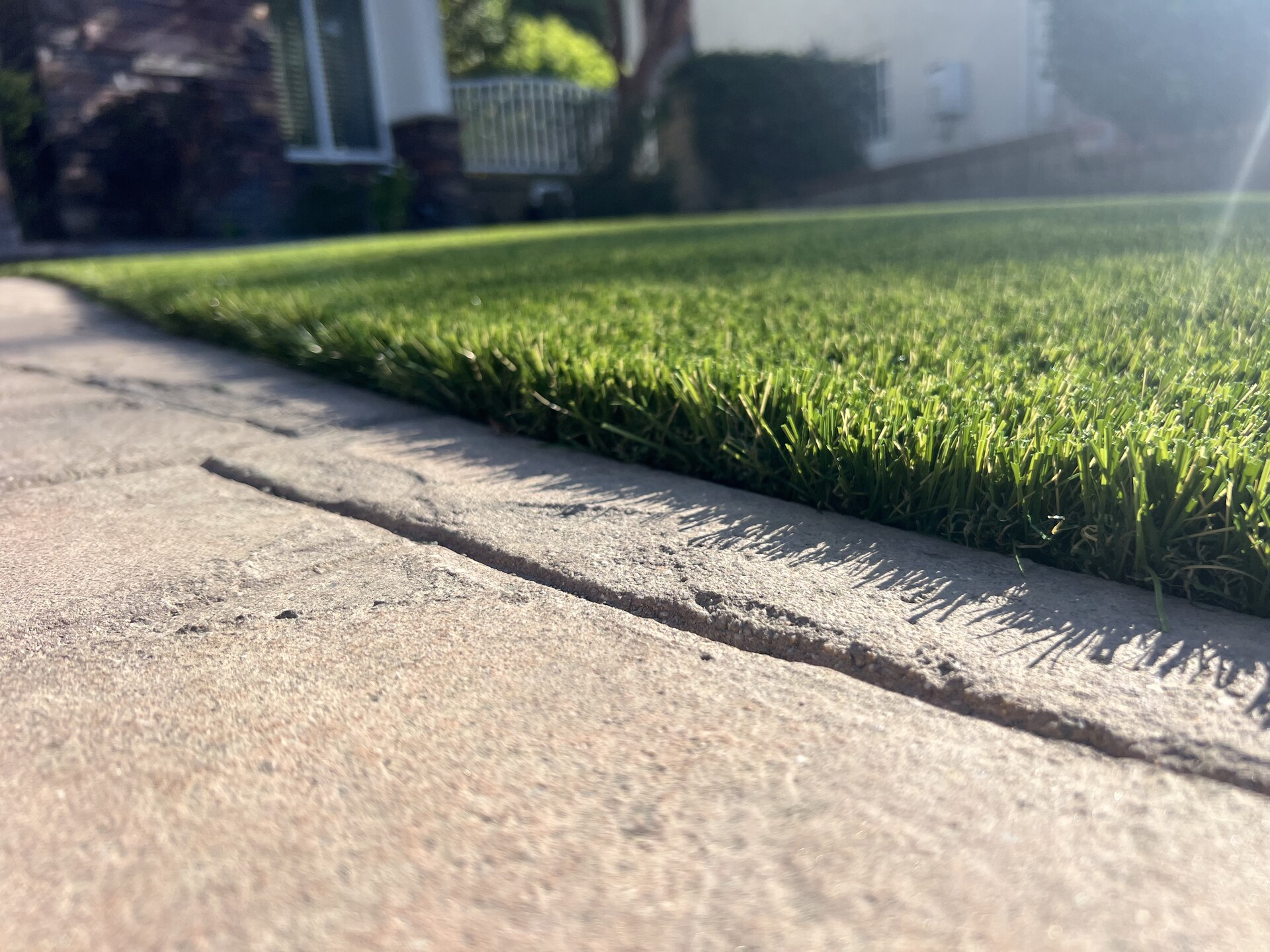
The first thing that separates a great install from an average one is base grade — and it’s also the thing most companies get wrong. A proper install brings the base all the way up to level with whatever borders it: a sidewalk, a paver edge, a planter wall, or any other hardscape transition.
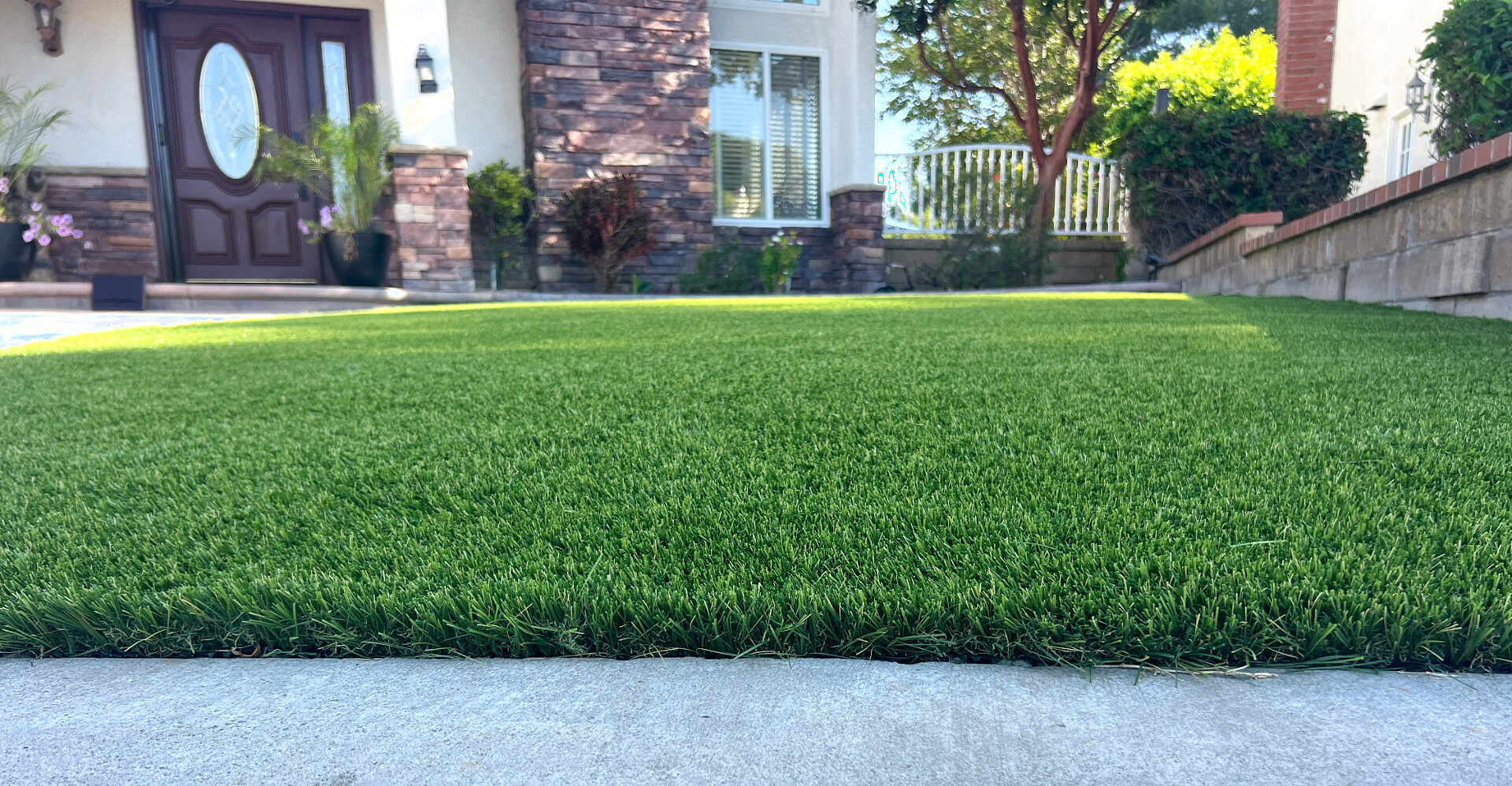
When the grade is done correctly, something happens that most people don’t expect: the lawn actually starts to look like real grass. The tall profile of the blade stands fully visible right up to the edge, resembling a natural lawn that’s just been given a clean, professional edging treatment — not a rug dropped on top of the dirt with the edges tucked under.
This is one of those details that’s invisible when it’s done right and glaringly obvious when it isn’t. A lawn with poor grade looks recessed, thin at the edges, and oddly flat. A lawn with correct grade looks like it belongs there.
Grooming and Infill: Making the Blades Stand Up
Getting the grade right is only half the equation. Once the base is correct, the blades themselves have to be treated properly to actually stand up and show their full height.
That starts with power grooming. The turf needs to be brushed up to vertical — not once, but several passes — to lift the fibers out of the flattened, shipped-and-rolled position they start in. Skip this step, or rush it, and you end up with exactly the matted, carpet-like look that gives artificial turf a bad reputation.
Grooming alone isn’t enough, though. The blades also need enough infill worked into the base to anchor them vertically. Infill isn’t just filler — it’s what holds each blade upright under foot traffic, sun exposure, and time. Without enough of it, even a perfectly groomed lawn will start leaning and matting again within weeks.
What It All Adds Up To
Grade, grooming, and infill aren’t glamorous parts of an installation. They don’t show up in a sales pitch and they’re easy for a crew to shortcut. But they’re the difference between a lawn that looks like the photo above — full, upright, and indistinguishable from a beautifully maintained natural lawn — and the flat, fringe-like turf you see driving through most neighborhoods.
A great install isn’t about the product. It’s about everything that happens before and after it’s rolled out.